
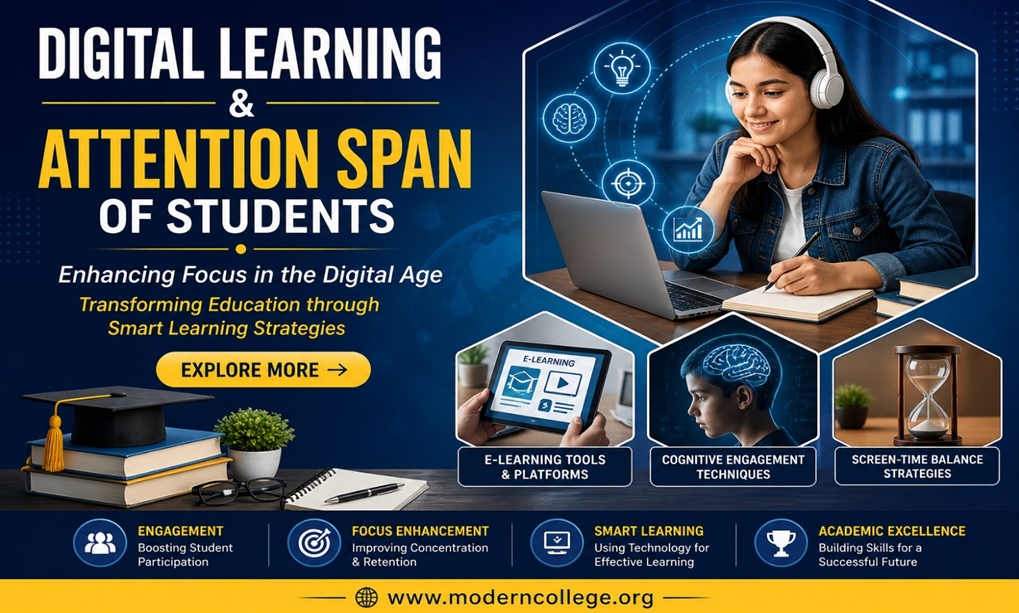
Digital Learning and Students’ Attention Span: Benefit or Barrier?
In the 21st century, education has changed rapidly due to digital technology. Smart classrooms, online teaching platforms, and mobile learning apps have made learning more flexible and accessible for students. However, along with these benefits, an important concern has emerged:
How does digital learning affect students’ attention span?
What is Digital Learning?
Digital learning refers to the use of technology such as computers, tablets, smartphones, and the internet to support teaching and learning. It includes:
What is Attention Span?
Attention span is the length of time a student can stay focused on a learning task without getting distracted. It is important because it directly influences:
Positive Impact of Digital Learning on Attention Span
1) Interactive and Engaging Content
Digital tools use videos, animations, and interactive features that make learning more interesting. This often helps students stay attentive for longer.
2) Personalized Learning
Many learning platforms adjust content according to a student’s pace and level. This keeps students actively involved and reduces boredom.
3) Instant Feedback
Online quizzes provide immediate feedback, helping students correct mistakes quickly and remain motivated to continue learning.
4) Multisensory Learning
Digital learning combines audio, visual, and interactive elements. This supports different learning styles and can improve focus and understanding.
Negative Impact of Digital Learning on Attention Span
1) Increased Distractions
The same devices used for learning also provide access to social media, games, and constant notifications, which can break concentration.
2) Reduced Deep Focus
Frequent exposure to short-form content (reels, short videos) may reduce the ability to focus on long reading tasks or complex topics.
3) Cognitive Overload
Too much information on screens multiple tabs, videos, and content can overwhelm students and reduce effective concentration.
4) Habit of Multitasking
Switching between apps and tasks weakens sustained attention and may negatively affect deep learning and critical thinking.
How to Balance Digital Learning and Attention
Digital learning works best when used in a structured and disciplined manner.
For Teachers
For Students
For Parents
Conclusion
Digital learning is a powerful educational tool that can improve attention through engagement, personalization, and interactive learning. At the same time, if distractions are not managed, it may reduce deep focus and encourage multitasking.
Therefore, the key is balanced and mindful use of technology, so students can develop strong concentration and meaningful, long-term learning habits.


